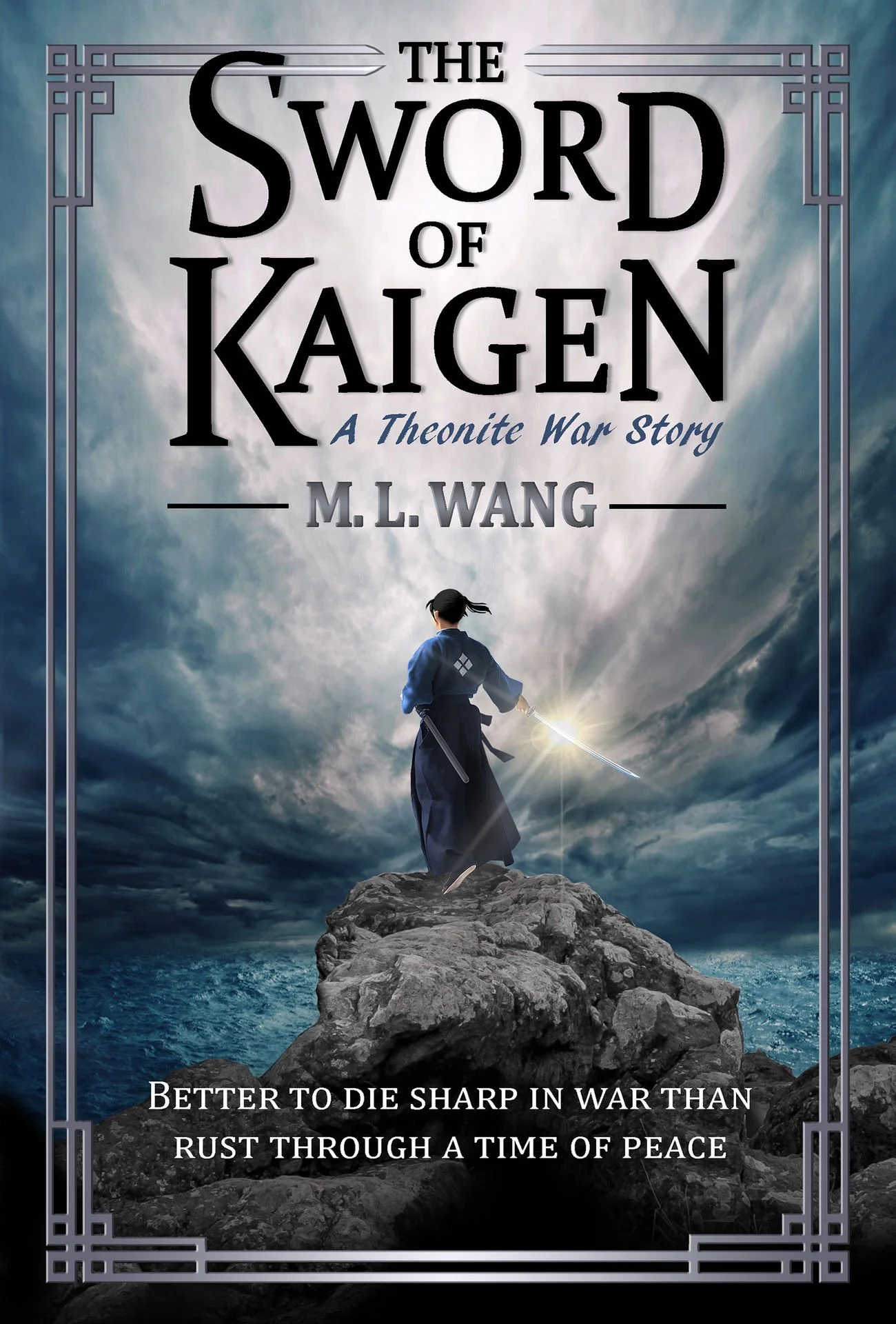
Sword of Kaigen
Every so often someone recommends me a book that I discount out of hand for whatever arbitrary reason I can’t even explain. Sword of Kaigen was one of these. It’s been on our bookshelf for years, I’ve heard people praise it, but feudal Japanese fantasy just does not draw me in as a concept. Yet when I finished a marathon of eight Dungeon Crawler Carl books in two months, I needed a bit of a palette cleanser. I wanted clean fantasy, and I couldn’t think of anything else, so I bought the kindle version and started reading.
Boy was I capital S Stupid to dismiss this one. This book is fantastic. More so than 80% of the fantasy I’ve ever read.
M. L. Wang does the one thing that makes me fall in love with a world - build a world with whatever rules you want, and then follow them absolutely.
This book has some of the most in-depth characters I’ve ever come across, which is a joy in a fantasy setting. It manages to be both grounded and fantastical. It meshes painful family drama with an intriguing world, where the magic is deeply ingrained in the cultures it emerges from. The danger is real, no one is safe, and I honestly could not predict where the story was going at any given moment.
I had two niggles with this book:
a specific scene where there was so much discussion on two characters’ relative power levels, that I started thinking “I get it.”
After a climactic moment around halfway, more than 100 pages is dedicated to the aftermath.
The first point is forgivable in the grand scope of the story, and the second point becomes a non-issue once you realise what kind of book you’re reading. M.L. Wang took risks here that I haven’t seen many other authors take, and they pay off. The shocks are shocking, and the aftermath is treated with respect.
It’s hard to discuss the things I loved most about this book without spoiling it, but what I can say is that the main characters’ struggles with the responsibilities thrust upon them is beautiful. They are adept at navigating their world, even though they might have been better suited for a different one. But life isn’t fair, and then it continues anyway. The minor characters have lives of their own that feel as though they continue, even though the focus isn’t on them. Wang masterfully fleshes them out with subtle hints of their personalities, that only made me wish I could have seen more of Hiroshi, Izu, or the little Fonyakalu. But unfortunately we won’t ever get that. The series is discontinued, and I am only grateful that I got to spend my time with this standalone.
The books I was reminded of when reading this are: Name of the Wind, Avatar: The last airbender (but with less child-friendly applications of the bending powers), and (weirdly) Anathem, because anachronistic societies live in the middle of modern empires, yet they are still politically important.
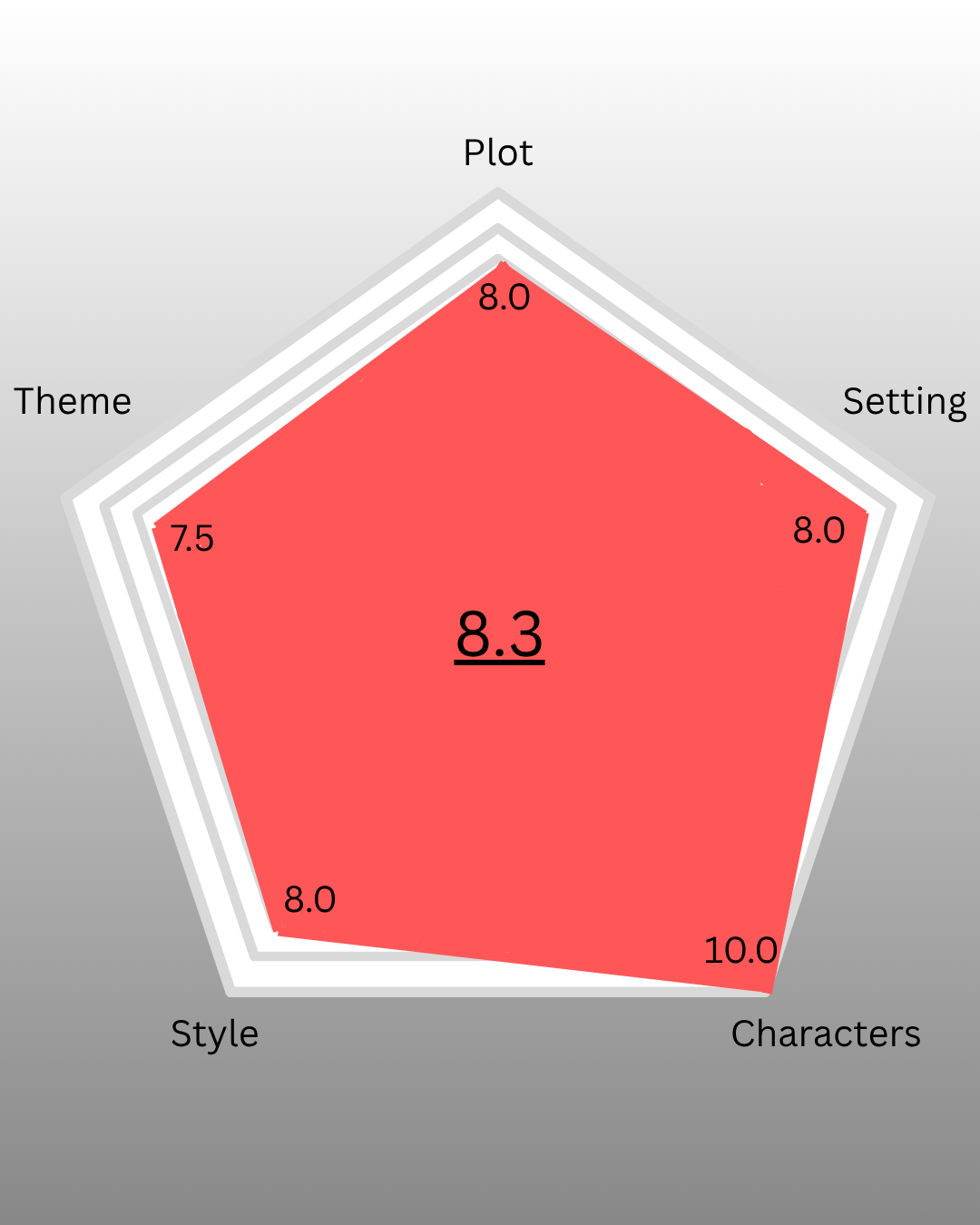
I score this book along Aristotle’s five metrics for narratives and give it an overall 8.3/10: