Neurodivergence and parenthood
I used to feel like a tourist in the neurodivergent scene. I was in my thirties the first time I even heard the word, and though some of the attributes sounded eerily on point for me, I felt like I had about as much right to call myself neurodivergent as Rachel Dolezal had to call herself black. It’s a serious condition, and should not be flippantly self-diagnosed. I was normal ‘enough’ to function in society. I wasn’t obsessed with trains, and I was extremely verbal.
Sure I preferred not to make eye contact, but I reminded myself to do it anyway often enough.
Sure I memorised every spell in the DnD 3rd edition rulebook in ten days. But that was just because I was excited about it.
Sure I spent fourteen hours straight, for three days in a row painting my first warhammer monster, but that was just because it was so cool.
Sure I could spend hours on a weekend agonising over the proportion of lands in my magic the gathering decks and calculating the probabilities of having enough mana to play two cards each turn based on the spread of mana costs. But that was just because I liked math, and magic.
Sure I had a delay in processing my emotions, but that was just how I was wired.
Sure repetitive games stuck with me a little too well, but that was just a dopamine hit when I was depressed.
Sure I struggled to understand some people’s emotions and behaviour, even though I was extremely adept at analysing and predicting them, but that was just because I spent so much time doing it as a child.
Sure I was far more comfortable diarising my thoughts than dealing with my feelings, but that was just… ugh, the excuses are exhausting.
Those were just a few items in a basket of quirks that didn’t bear too much thinking about, and that never connected to each other in my mind. I’d always wondered why I felt ‘different’ in a different way from how others said the same thing. But that passed with teenage angst. I took medication for it for a while, I disappeared into myself for months at a time, even when I was in relationships. I found that life largely passed me by while I was lost in a fog of my own forgotten thoughts.
But life went on. I found my niches, I found mutually caring relationships, and I found the things that made me happy. I met a wonderful woman, married her and adopted her son. I love that boy to death and the problems we have are blessedly prosaic.
Then two weeks ago my first biological child was born. And by god won’t that get you thinking. Doing a feed at half past midnight, just watching them suckle, you can’t help but think that you were once that small. That your mother must have held you like this in a time where men didn’t really do much of that. That you had to grow from that size to your own size, and go through the most difficult parts of your life without quite understanding yourself or how you were supposed to deal with everything. That the parent who might have been wired the same was also capable of disconnecting completely from you. Whatever his feelings may have been on the matter, you were still clutching around in his absence, not even knowing that he might have had the answers you needed. It suddenly becomes important to put together that little basket of quirks into a coherent puzzle, because your own baby might have inherited those same traits.
And it occurs to me that it is a parent’s duty to pay attention to a child. To notice their idiosyncrasies. To see the way they operate, and how it relates to the world. To empathise. To prepare them with the tools they need to understand themselves and navigate the world, not smoothly and painlessly, but authentically. To love them so unconditionally, that they will recognise what a good connection feels like when they find it; and that they will not be conditioned to stay in bad ones.
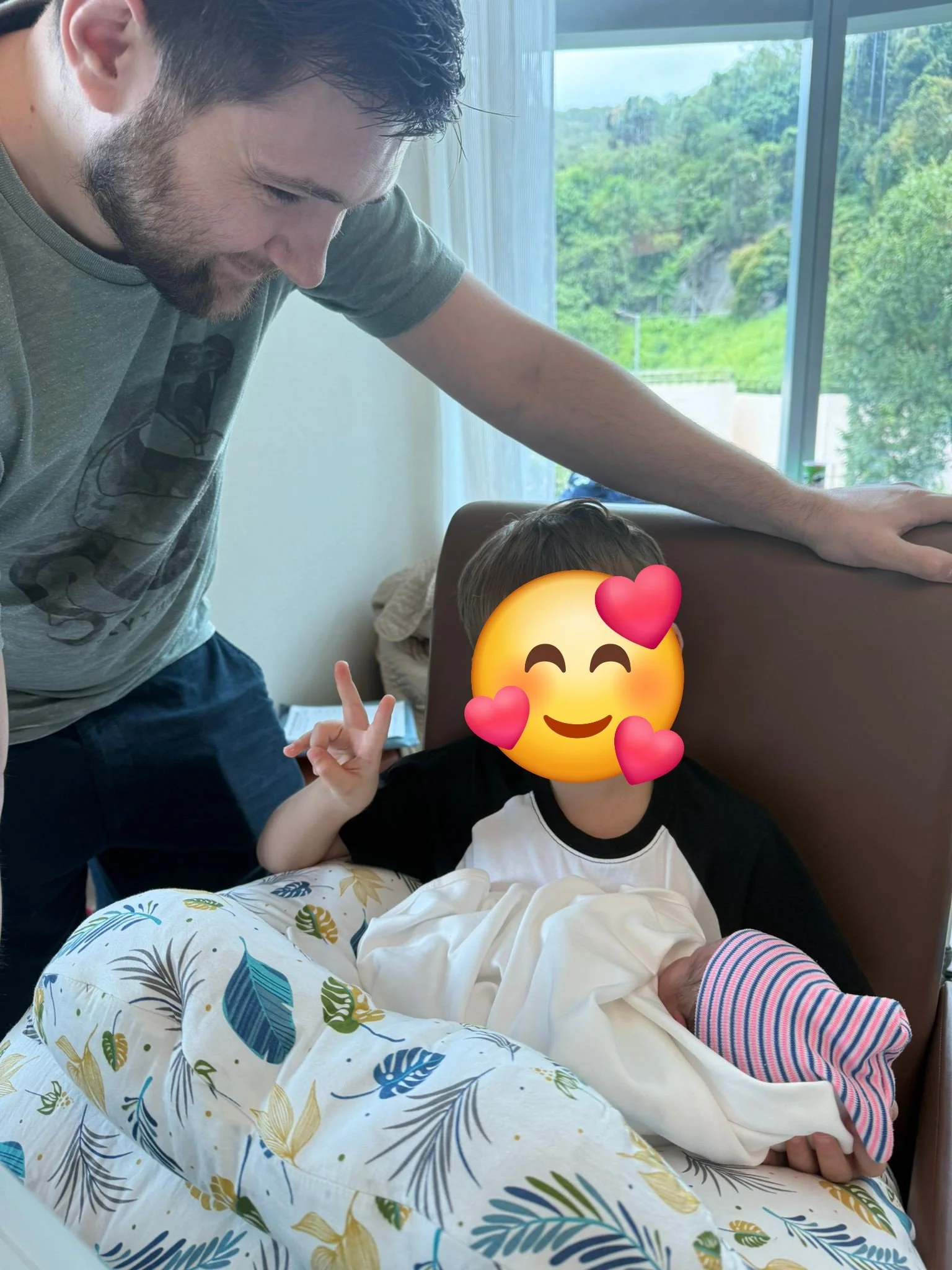
My boys.
I lucked out. In every metric, my life has been immeasurably been improved because of the partner I chose, and who chose me. She helped me shed my (most of) my severity towards myself, and realise that for the sake of our first son, I had to be more gentle with myself. She called me on behaviour that didn’t fit into the home we wanted. Not as accusations, never as barbs. She loved me enough to help me see my own wounds, and help me find the ways to disinfect them.
And our two children are the products of that love. They will grow up in a house that values connection over obedience, and emotional safety instead of derision.
