The Crucible - Background Lore
At the core of the universe lies a black hole so vast that its gravity caresses the outer reaches of infinity. Yet it is only the heavens’ second-greatest power. The first is the Supernal Cogitator, an artificial intelligence that feeds on the energy of uncountable stars. Its creators have long ago left behind their empire, opting to enter their consciousnesses into individualised heavens.
Yet some of these so-called Xennin re-enter real space, roaming as gods to the fledgeling races. And a handful among these grouped together to create a world inside the universe’s central black hole. They called it the Crucible. It is their playground, and their arena. Here they bring lesser races to conduct endless wars for their edification or entertainment.
For these indentured unfortunates, there is no hope. There is only the eternal cycle of victories and deaths.
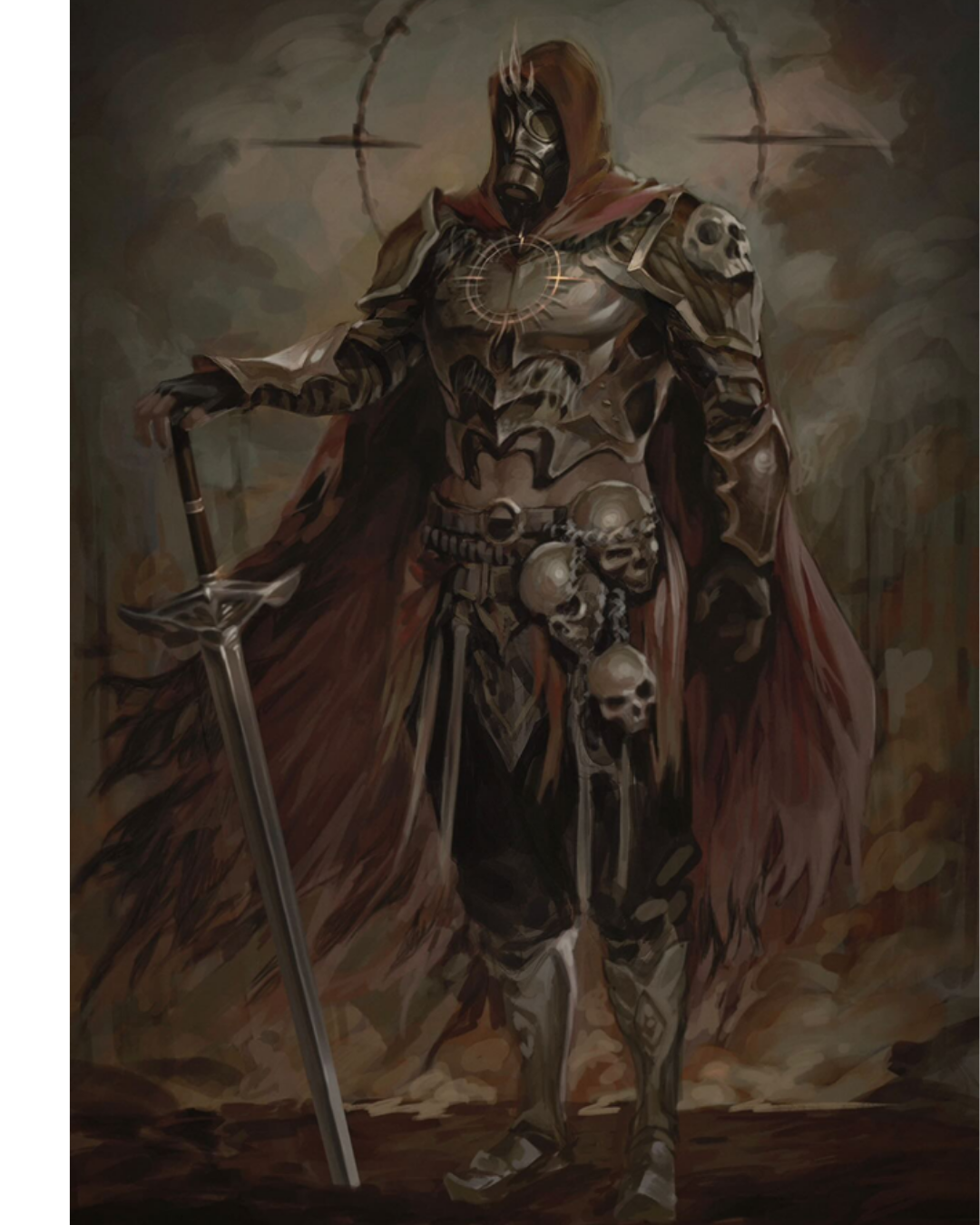
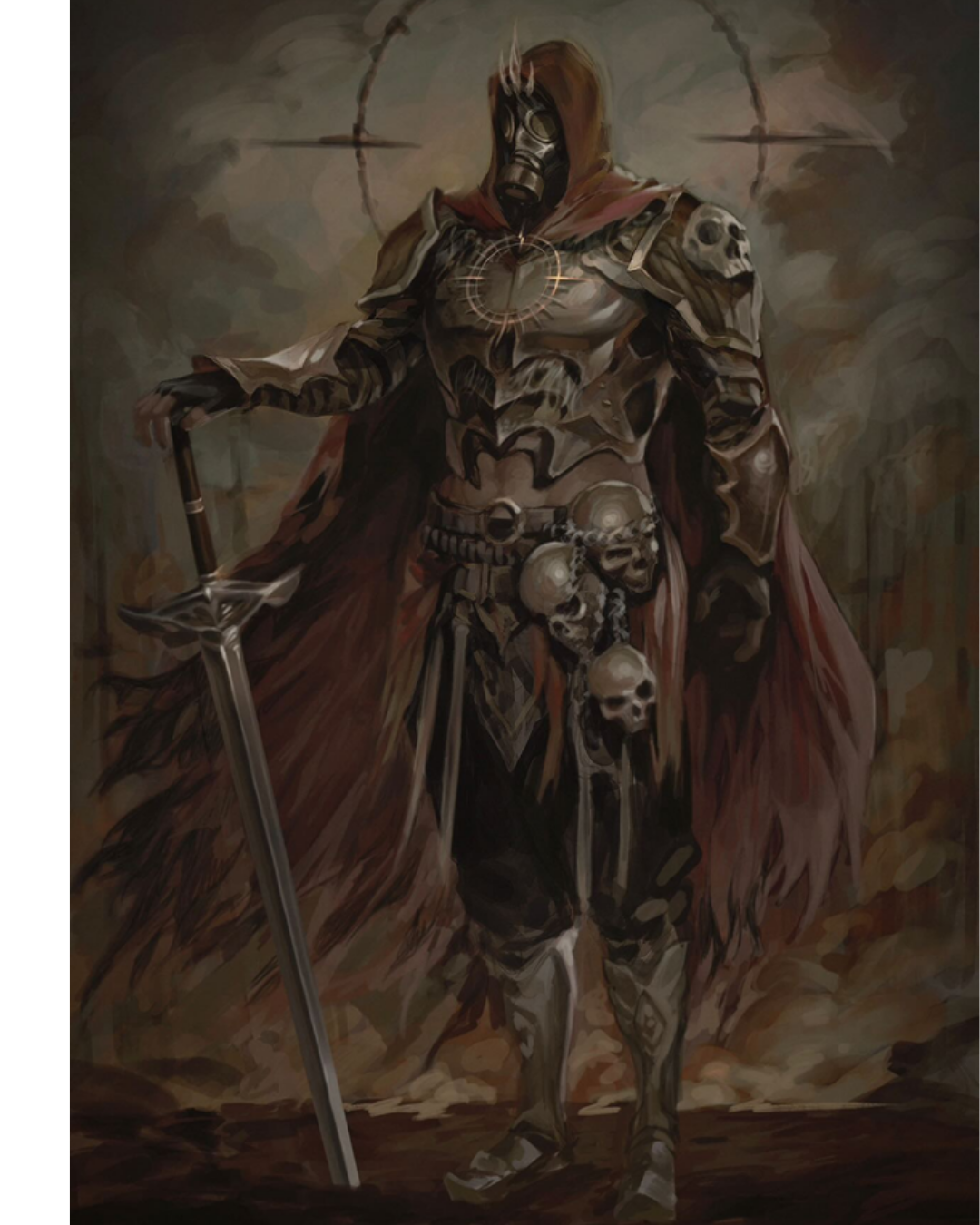
A Red Choir Cardinal-Marshall
The Galactic War
Aeons before the universe fell under the power of the Supernal, it was a quiet expanse of hateful neighbours. Early empires became interstellar, or they collapsed in on themselves. Some found one another, but found the discovery frustrating. The distances between species were simply too vast for meaningful contact.
Those bellicose civilisations who sought conquest quickly realised that their prey would remain distant ambitions. A navy sent to subjugate would be technologically inferior to its target by the time it arrived.
Diplomacy was similarly frustrated by the speed of communication. Signals would reach a neighbour generations after it had been sent. An answer, if any came, would fall upon the ears of descendants who’d forgotten the intentions of their forebears.
Still, many species sent parties to meet one another, to become anthropologists or students among aliens. Many religions were tested and overthrown or adapted by the presence of aliens. And societal change happened mostly because of internal tensions.
Until the first warheads landed.
Hyperdense warheads struck local systems. Some extinguished the stars, others forced them to expand and swallow their solar systems. These weapons travelled too fast to be seen, let alone intercepted. Their trajectories could not be retroactively traced, and so the aggressor could not be determined either.
Every species who paid attention to the heavens realised that populated systems were disappearing. So began the age of fear. No one could trust any of their galactic neighbours, and none could know if an unknown power had already fired at them. Invisibility became safety, and so interstellar communications went quiet. Many species were exterminated well after their final signal had left their system, and many were doomed as soon as a probe found them.
A silent war began. There were no grand battles, no apocalyptic clashes. Each belligerent lived and died by their ability to strike first, and strike without being seen. Any show of life was a death sentence. Many who had yet to discover that they weren’t alone were obliterated.
Similar sequences of events happened across multiple galaxies. And over painfully slow millennia, the most successful among these civilisation-level assassins rose to become galactic powers. They instinctively sought one another out, while developing weapons capable of travelling intergalactic distances. Those other powers who had come to dominate their galaxies stars’ through peaceful collaboration were first to be destroyed - collateral damage in a continuation of the same cycle.
Ever greater weapons were hurled across the void. An intergalactic arms race pitted these against ever more sophisticated countermeasurers. The most successful belligerents were those who best centralised and coordinated their efforts. The Xennin were one of these species, and they accomplished it by ceding ever more responsibility to the AI that managed their civilian society.
They hid entire systems by building batteries around local stars to dim them out like snuffed candles. These batteries, called the Astral Lattice, ramped up their AI’s processing ability, until it became a godlike consciousness, calling itself the Supernal Cogitator. The Supernal advised the Xennin that they were superfluous to their own war. They were liabilities to be targeted by attacks that would render them braindead. It could protect them if they gave up their physical bodies and entered its digital space.
Many Xennin resisted the idea, but eventually, nearly all agreed terms for entering. Without them, the Supernal could wage war more aggressively. It was freed up to build an ever increasing gap in power between itself and its enemies. Until eventually it was alone. Its warheads had increased the gravity of enemy galactic cores, causing whole galaxies to collapse inward. Those empires that had been a threat were gone.
The Supernal immediately went to work exploring for more danger. It sent probes out in every direction to exterminate every intelligent species and colonise the universe. It could never transcend the speed of light, but it did find a loophole. Within each node, it could quantum entangle particles, so that they moved in unison in every node across the universe. As such it could communicate instantaneously across any distance.
This communication allowed for a methodical and endless expansion. The Supernal positioned the nodes of the Lattice so that it was within three lightyears of any given star, meaning it could destroy any one in just a little longer than three years.
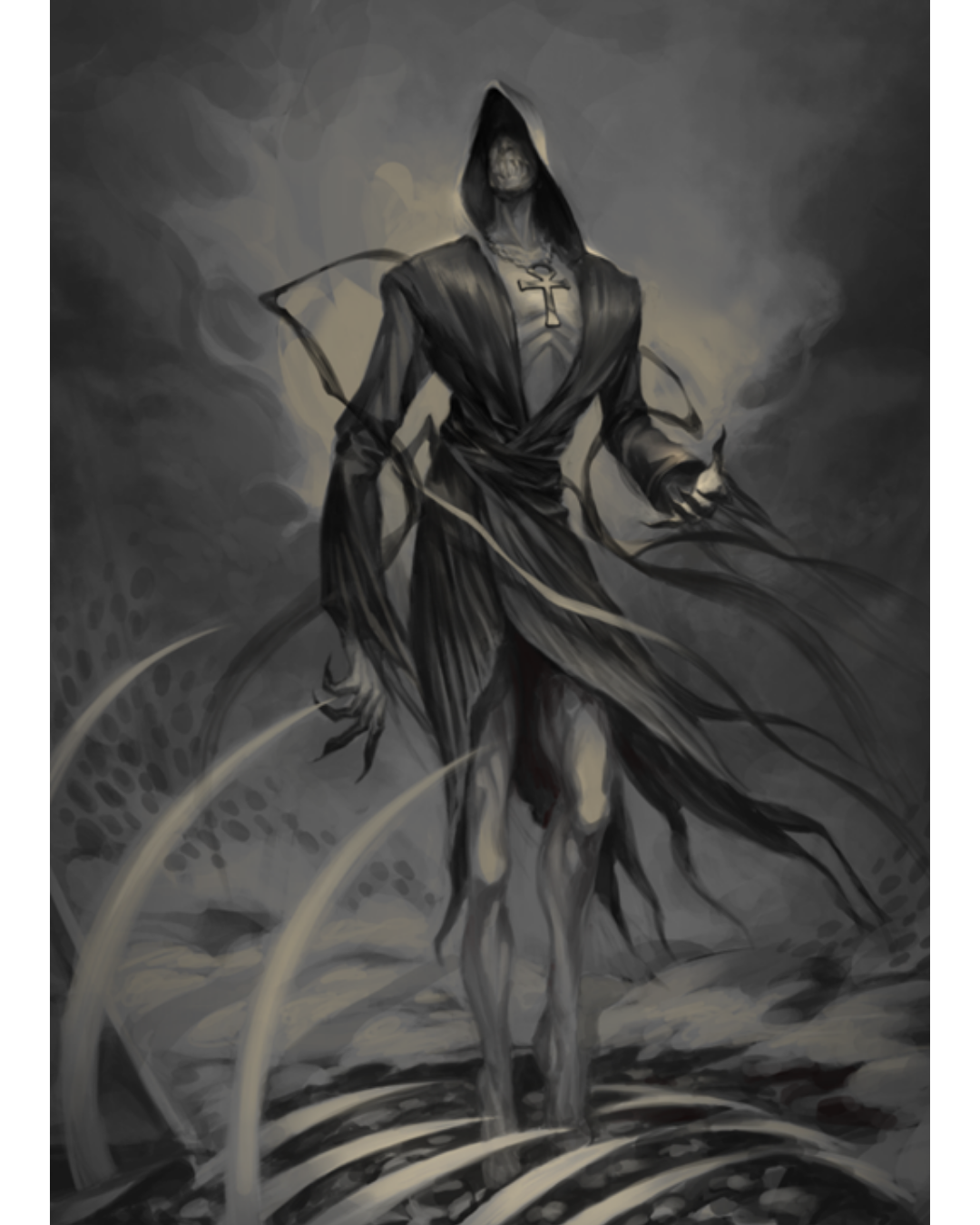
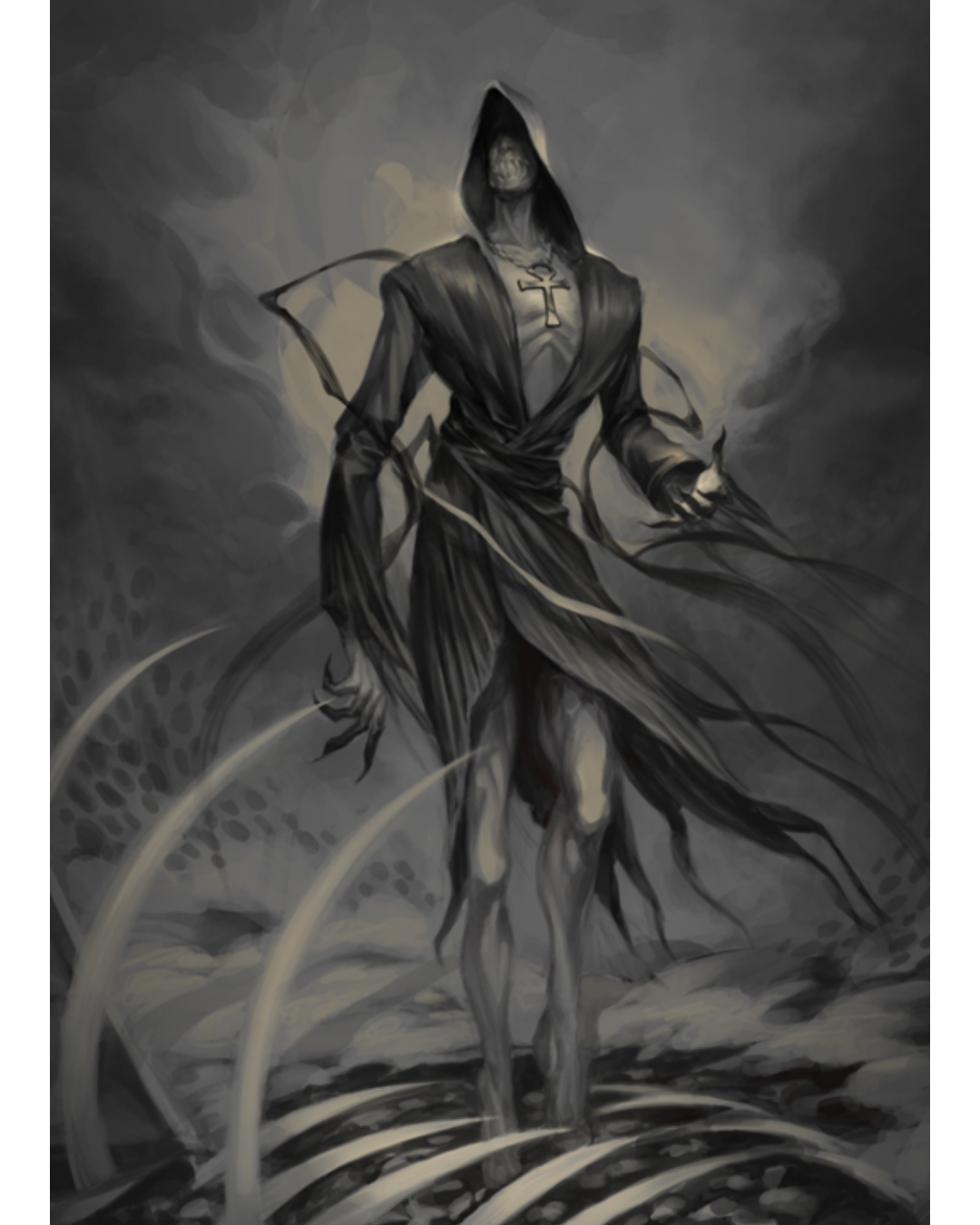
A Nesheph, who leads coteries of Veilborn.
Discarnation and Reification
The Xennin dubbed the process of entering the Astral Lattice ‘discarnation’. Quintillions entered, but each one found themselves alone on the inside. The Supernal explained that they had full rein over their environment. They could create and destroy friends, enemies, and whole worlds. They could live eternally, or live uncountable lives. They were given no restrictions, as long as they were no threat to the Supernal, the Lattice, or any other Xennin.
To the discarnated Xennin, time became irrelevant. They had no concept of real space, or whatever might happen there. They explored every pleasure and every pain in the realms where they were gods. Many became sadistic abusers to the civilisations they’d created. Many became benevolent. Some created a world and lived each life that passed through it. Others shaped thousands of worlds and made travel instantaneous between them simply to see what happened. Some tired of godhood and relinquished their powers. Others shut their minds down and entered oblivion.
A scant few chose to re-enter real space. They sped up their perception of time, so that they might exit the Lattice far in the future, when new fledgeling civilisations began making their ways to the stars. These ones exited through a process called reification. They built their own bodies and decided their capabilities. They would not be gods in the same fashion they enjoyed inside the Lattice, but they could still be any size or shape, and could be any combination of biological or mechanical. They could discarnate at any node, and reify at any other, making them able to travel near instantly across the Astral Lattice. And so they explored the universe for the first time since they exterminated it.
They saw the fledgeling races reach upward. Intelligent and creative species who looked at the stars and wondered whether they were alone. The Xennin walked among them and learned that their astronomers’ mathematics predicted where the Astral Lattice’s nodes ought to be, yet they could not see them. The best theory theorised an invisible material called Dark Matter, which could not be perceived, but which affected the universe through gravitation.
The Xennin were impressed. They queried the Supernal on why it allowed these creatures to live. It explained that it monitored every species, and as soon as they became a problem, it would destroy them. It never explained its criteria or reasoning. Though the perceptive Xennin noticed that a species was doomed if it ever definitively discovered a node in the Astral Lattice, or if it reached 50% the speed of light.
The Xennin became increasingly intrigued. These creatures were entirely original. They were not constructs made by the Xennin in a glorified playground. They engaged, often catastrophically for the lesser species. Sometimes they helped them advance, only to see the Supernal wipe out their pets.
They became frustrated by the Supernal’s oversight. They could not abide the Supernal looking over their shoulders determining a species’ right to life. They wanted that power for themselves.
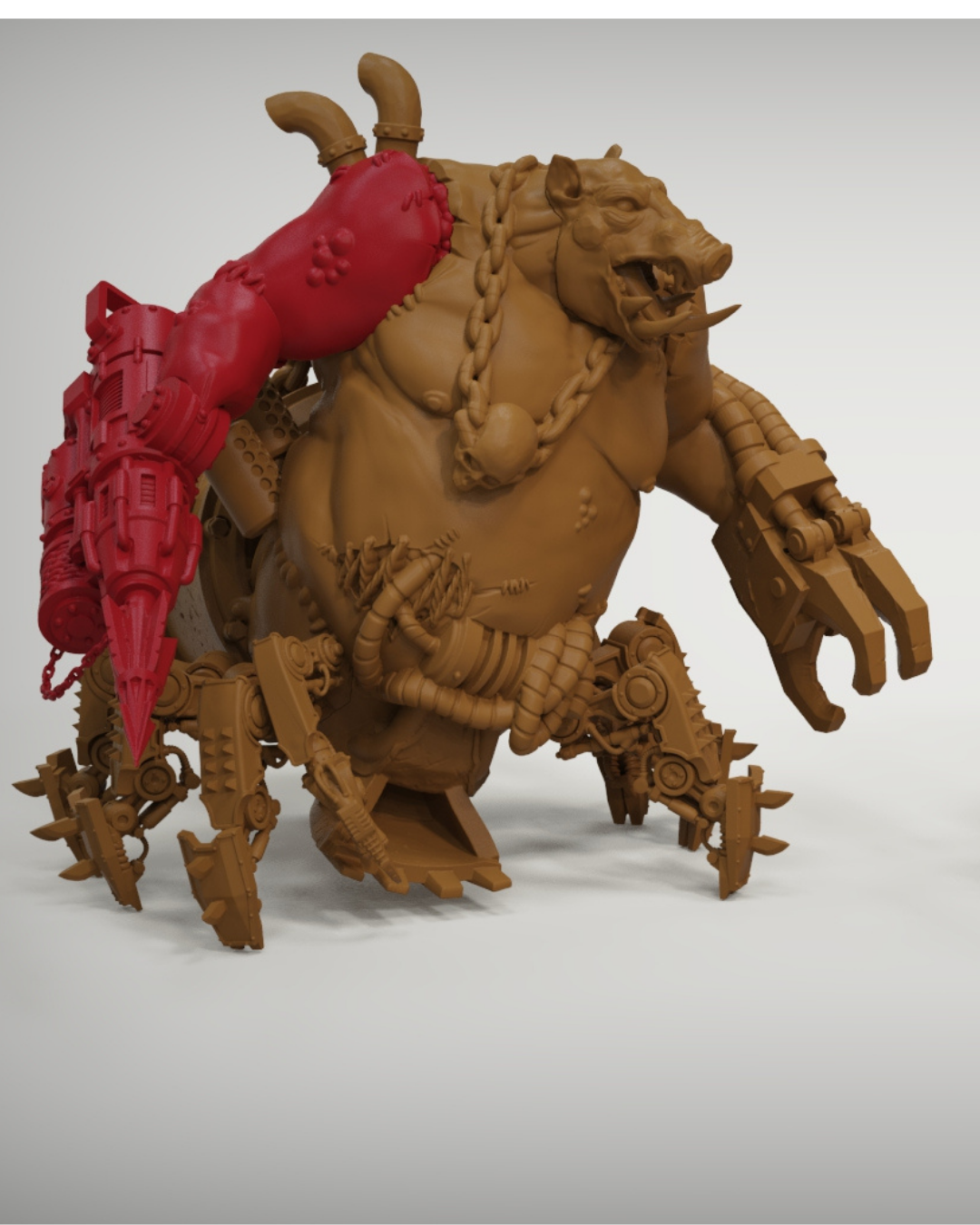
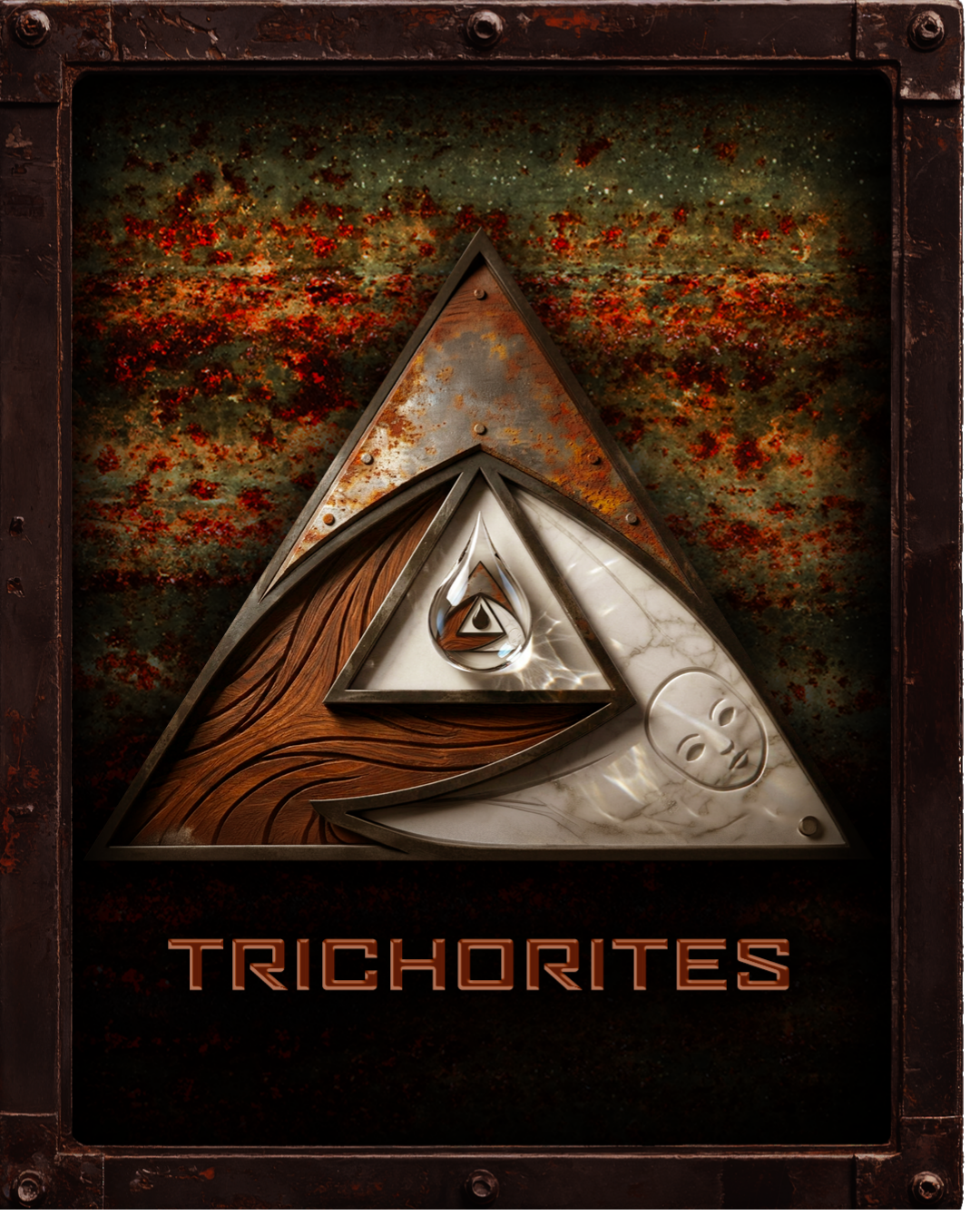
A Trichorite Iron Drover.
The Crucible
As the reified Xennin spoke to each other, more of them became interested in ‘real stakes’ for their playthings. While discarnated, nothing they did could impact the universe. And had they not reified to experience something more real?
They discussed it with the Supernal, and devised a plan. They would create a contained space exempt from its authority, an inescapable prison. There, they would have power as they did while discarnated. They would populate it with species they took for themselves.
They called it the Crucible. A project so colossal that they could only attempt it once - at the universal core. They built and injected a life-sustaining bubble into the black hole there. This Crucible exerted an equivalent outward force to the black hole’s crushing pressure, creating a realm impenetrable to everything except themselves.
The interior appeared as though filled with heavy fog. This white matter was called flux, and the Xennin used it as the essence of creation. They could shape it in any way they chose. They could control matter, space, and time. All that was missing was a truly real population.
But before they populated it, the Xennin agreed on the dangers. They’d each spent an eternity as a singularly omnipotent god, and would need to come to terms with sharing a modicum of power. In the Crucible, they’d be a pantheon in which members were checks on one another’s power. They established a set of rules to bind each of them, on pain of banishment.
No Xennin may directly modify, or interfere with one another’s creations.
Each Xennin may bring one species into the Crucible, and these species are not bound by the first rule. These species must have developed in real space.
The pantheon would limit any species’ power, in terms of numbers, technology, or natural ability, in order to maintain an agreed upon balance.
Each species is to receive a homeland, the nature of which is determined by their new god.
The species would be pitted against one another, and would be told such by no later than the point they leave their homeland.
And with these simple rules, the pantheon set forth, finding ideal candidates to be their play pieces in the Crucible. They abducted and injected their pets, seeded them into a new homeland. They made the homelands puzzles to solve, where the inhabitants would climatise while they worked to escape, only to find that outside lay horror.
These doomed warriors exited their homelands into the dense flux. The blinding fog made them move slowly in search of the fabled alien homelands they were to destroy. That white chaos gradually solidified into familiar terrain, but lost shape again where they passed. The Xennin coordinated their pets’ paths to intersect, and once they did, the flux took shape into a battlefield.
They fought at the whims of gods they could never understand. They died again and again, as they were resurrected and given new strategies or insights. They assaulted each others’ homelands and defended their own. The battlefields and enemies changed constantly, and they were always hunted by the mysterious flux-dwellers.
There was no escape, nor reprieve. There was only this.
Many believed that they had already died and this was the afterlife. Few considered that their loved ones might still be in their old homes. The Xennin rarely took an entire planetary population, and some broadcast their pets’ endless suffering back to those pets’ homes.
So the events in the Crucible rippled outward. Wheels began to turn in the universe. Peace had reigned between the stars since time immemorial, and was now beginning to crack.
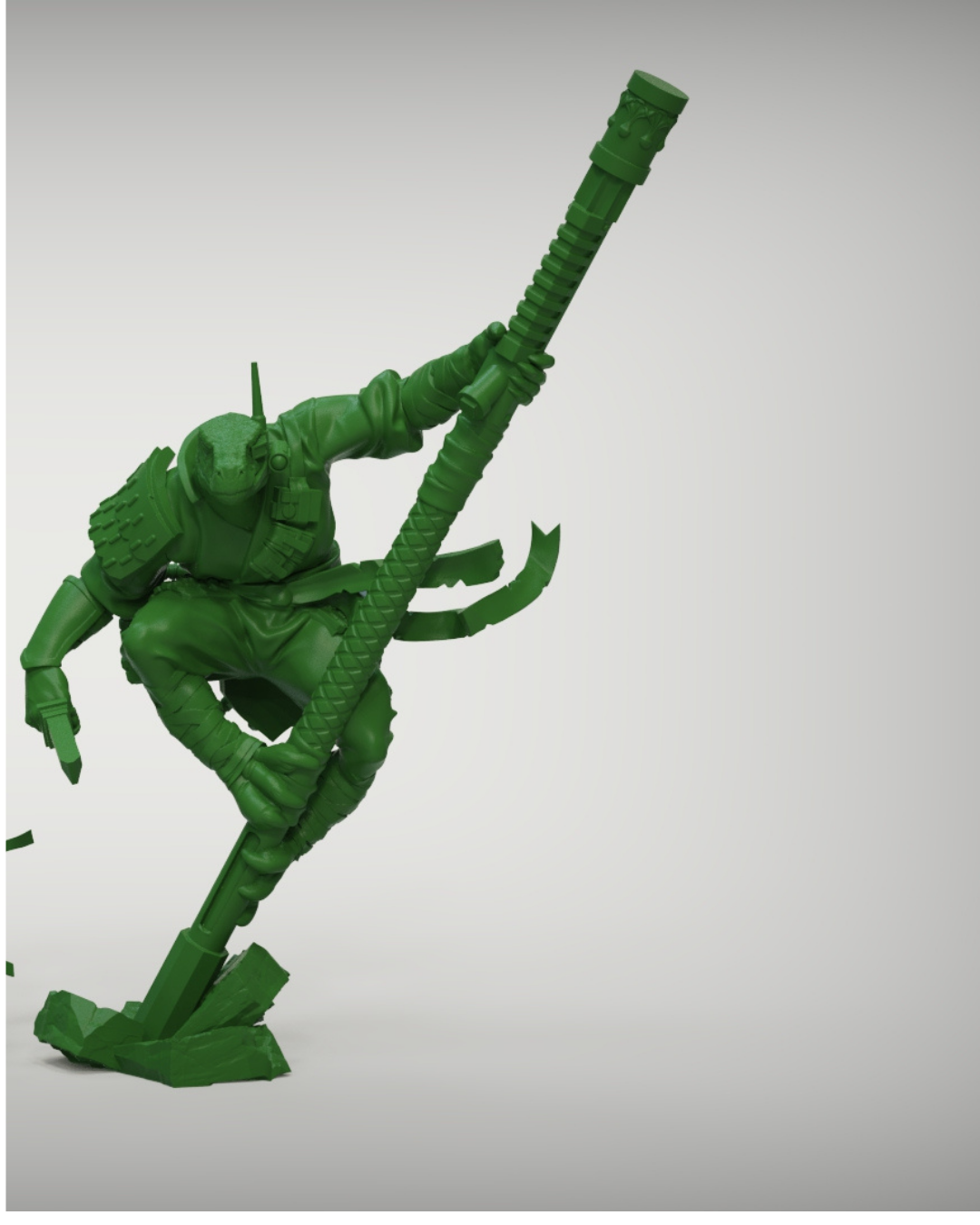
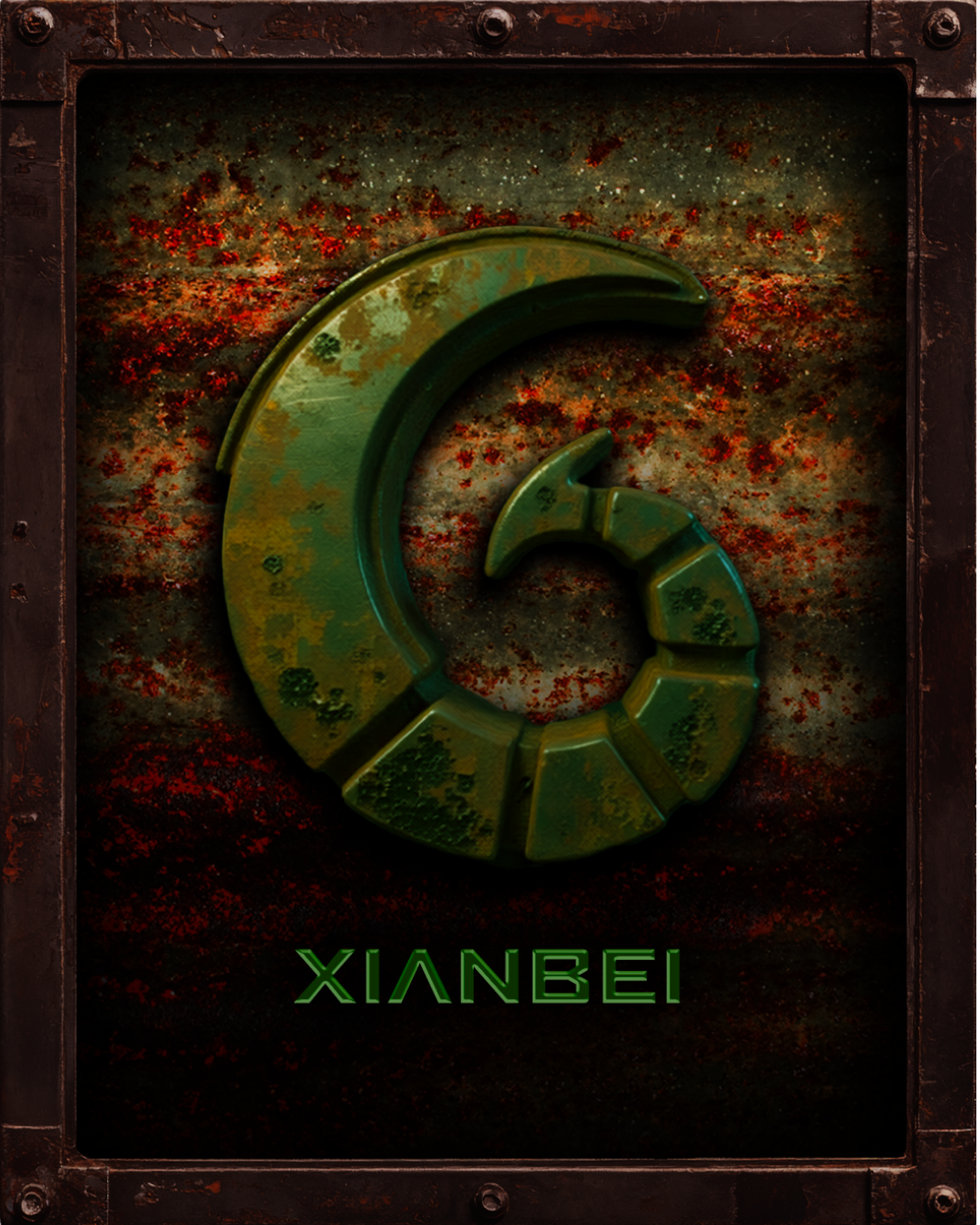
A Xianbei Artnographer.
Faction PDFs
Read more about the factions fighting in the Crucible byclicking the buttons below.
Red Choir Lore
Veilborn Lore
Trichorite Lore
Xianbei Lore
